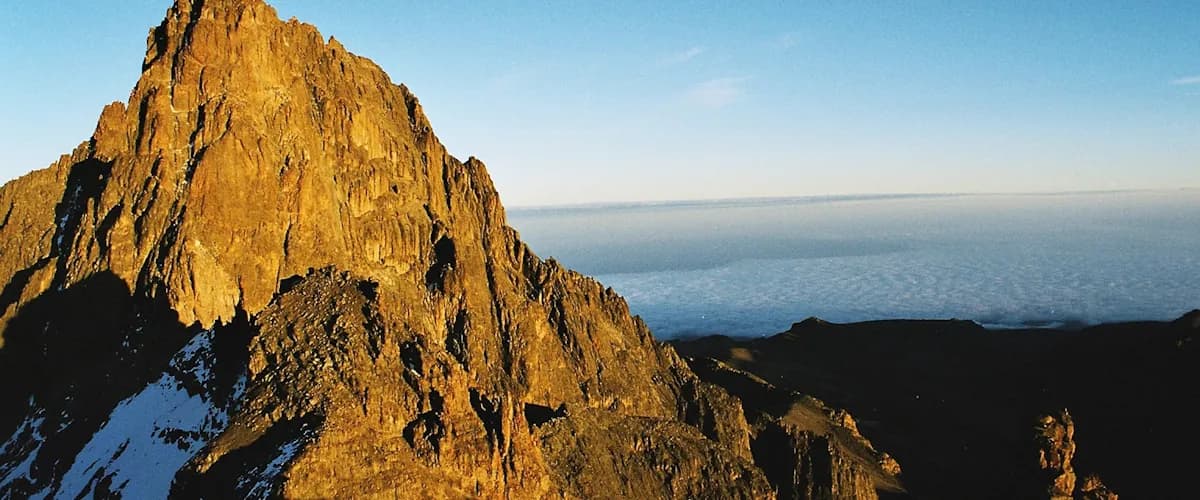
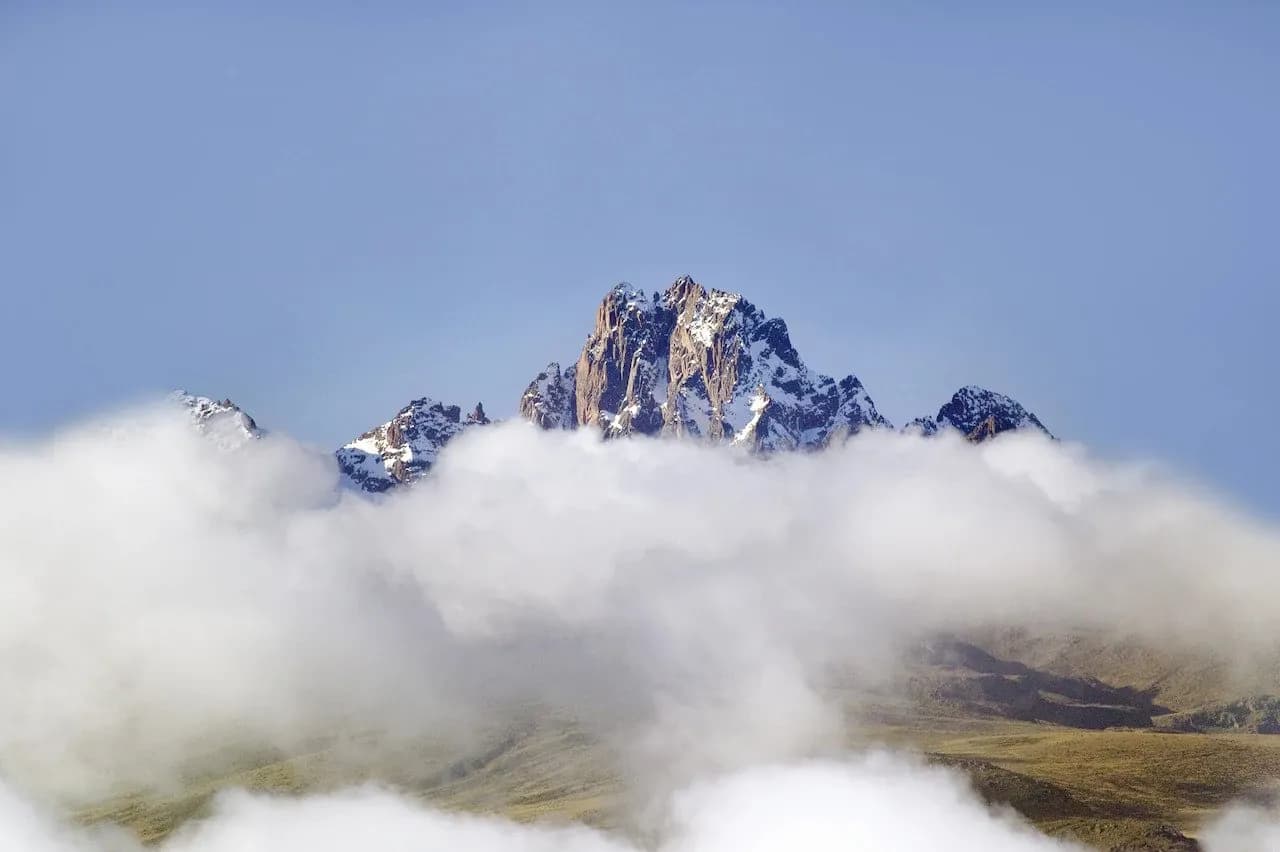
Point Lenana at sunrise
Summit attempts start in the early hours to reach the top around dawn.
Kenya · Central Kenya
Africa's second-highest mountain, on foot.
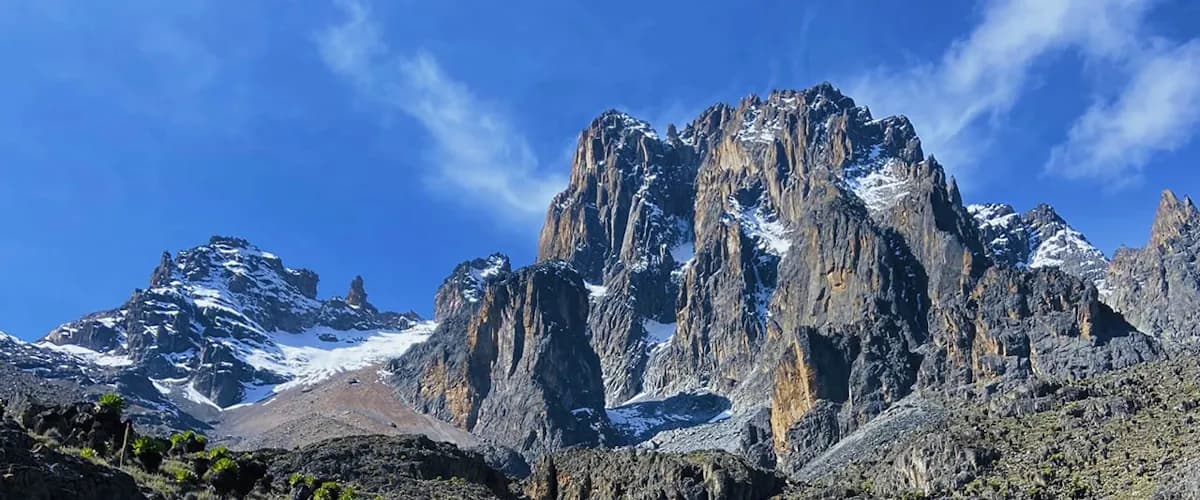
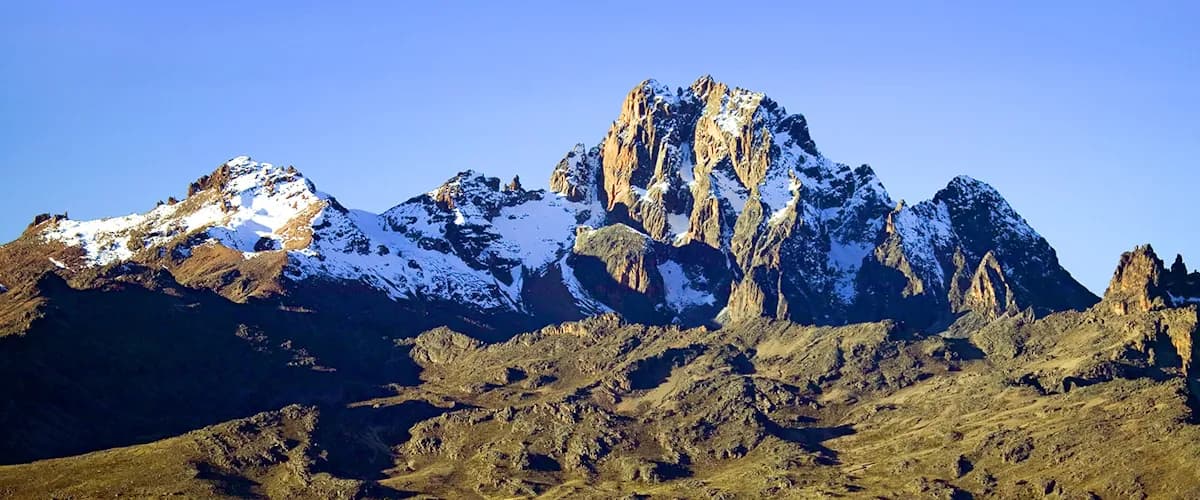
Mount Kenya is Africa's second-highest mountain and a UNESCO World Heritage Site. Its highest peaks, Batian and Nelion, are technical climbs, but Point Lenana (4,985 m) can be reached by trekkers, through forest, moorland and alpine valleys.
The place
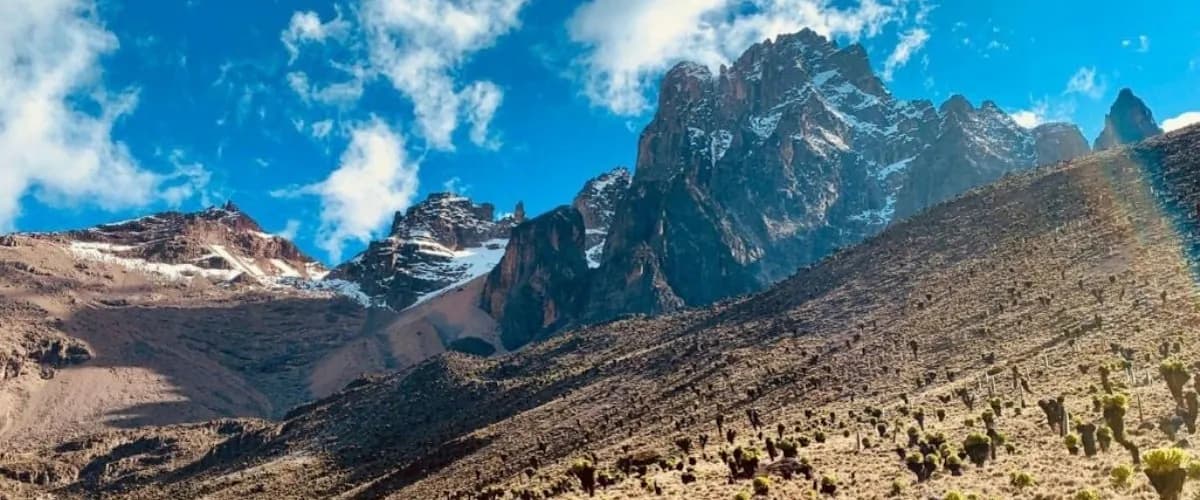
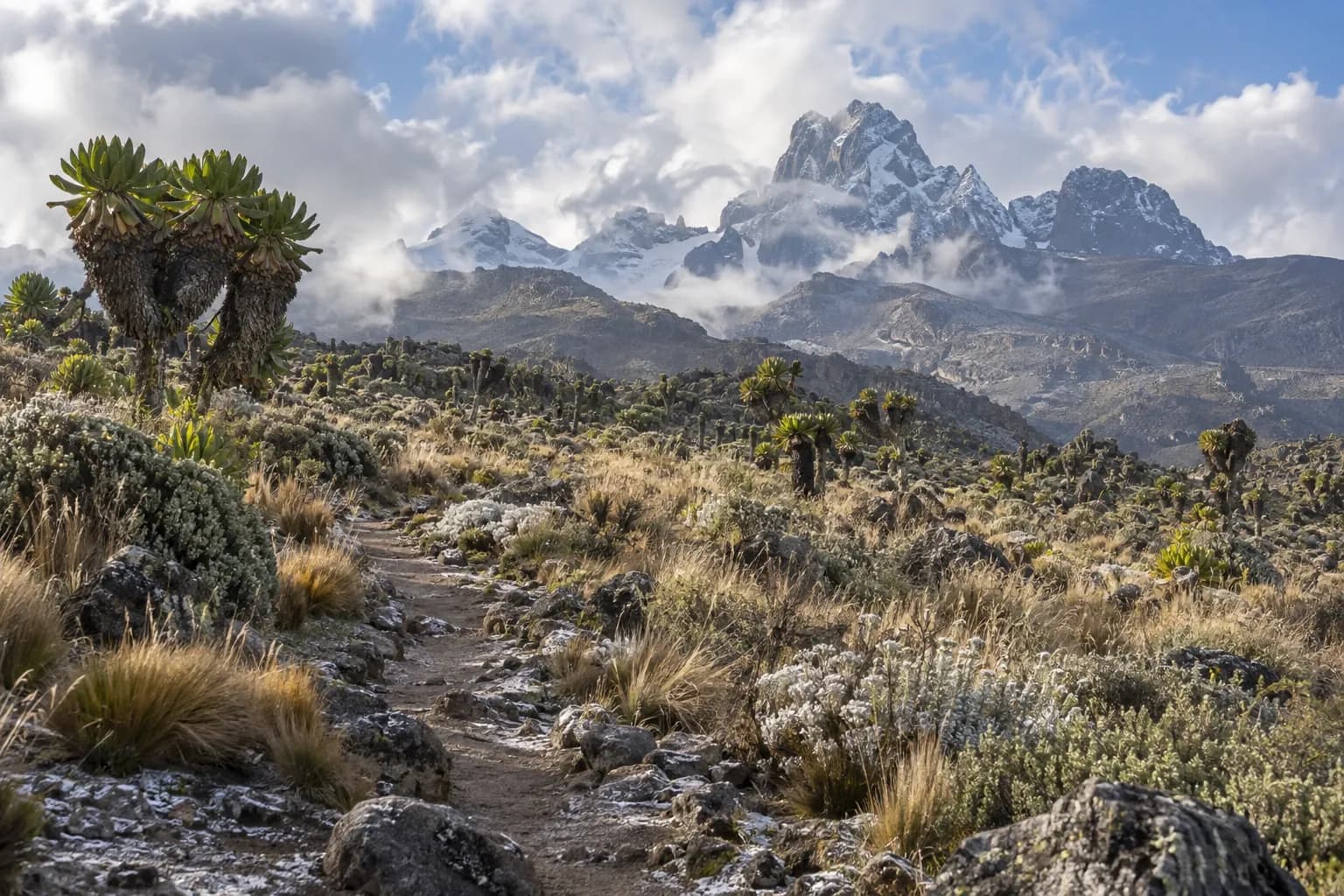
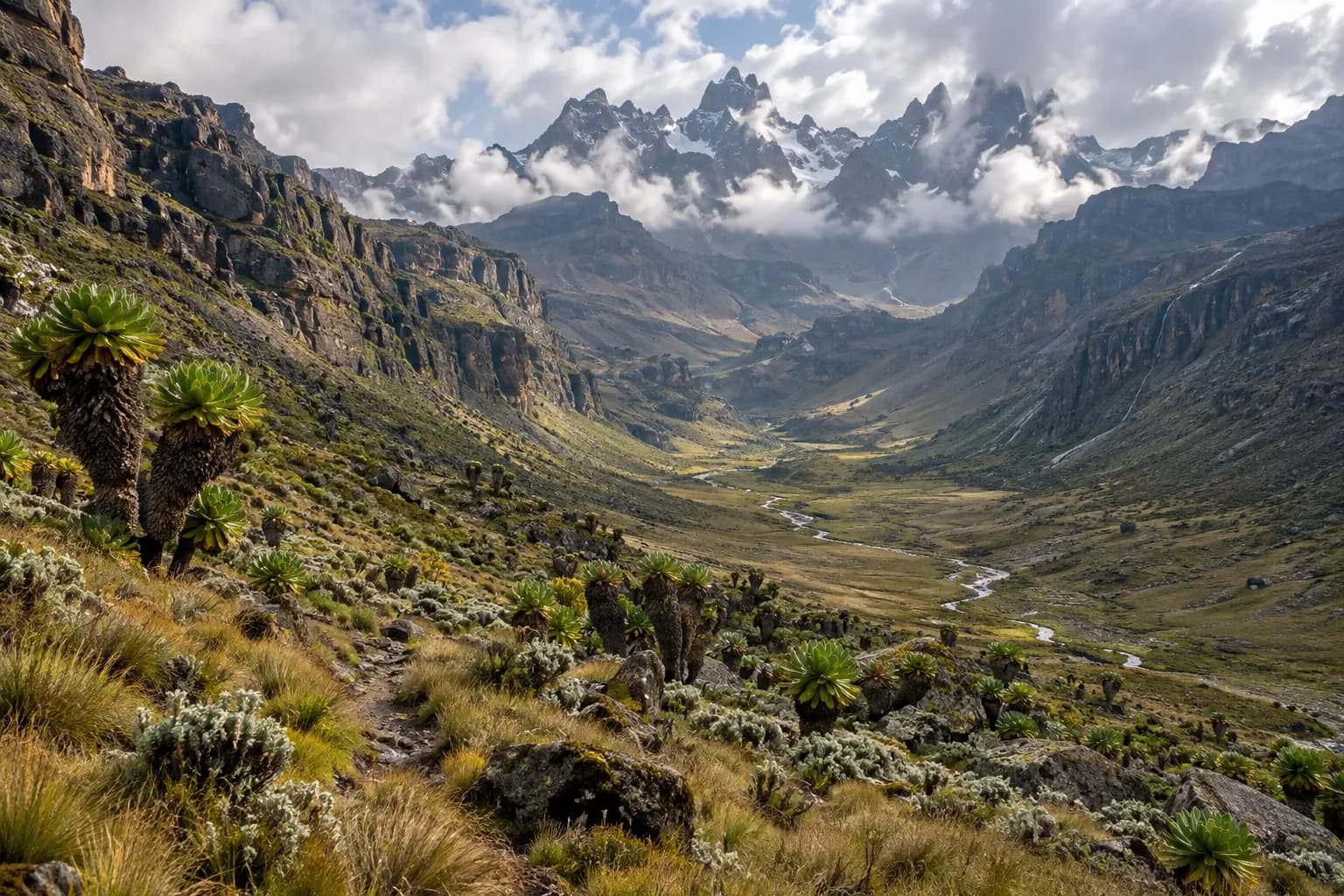
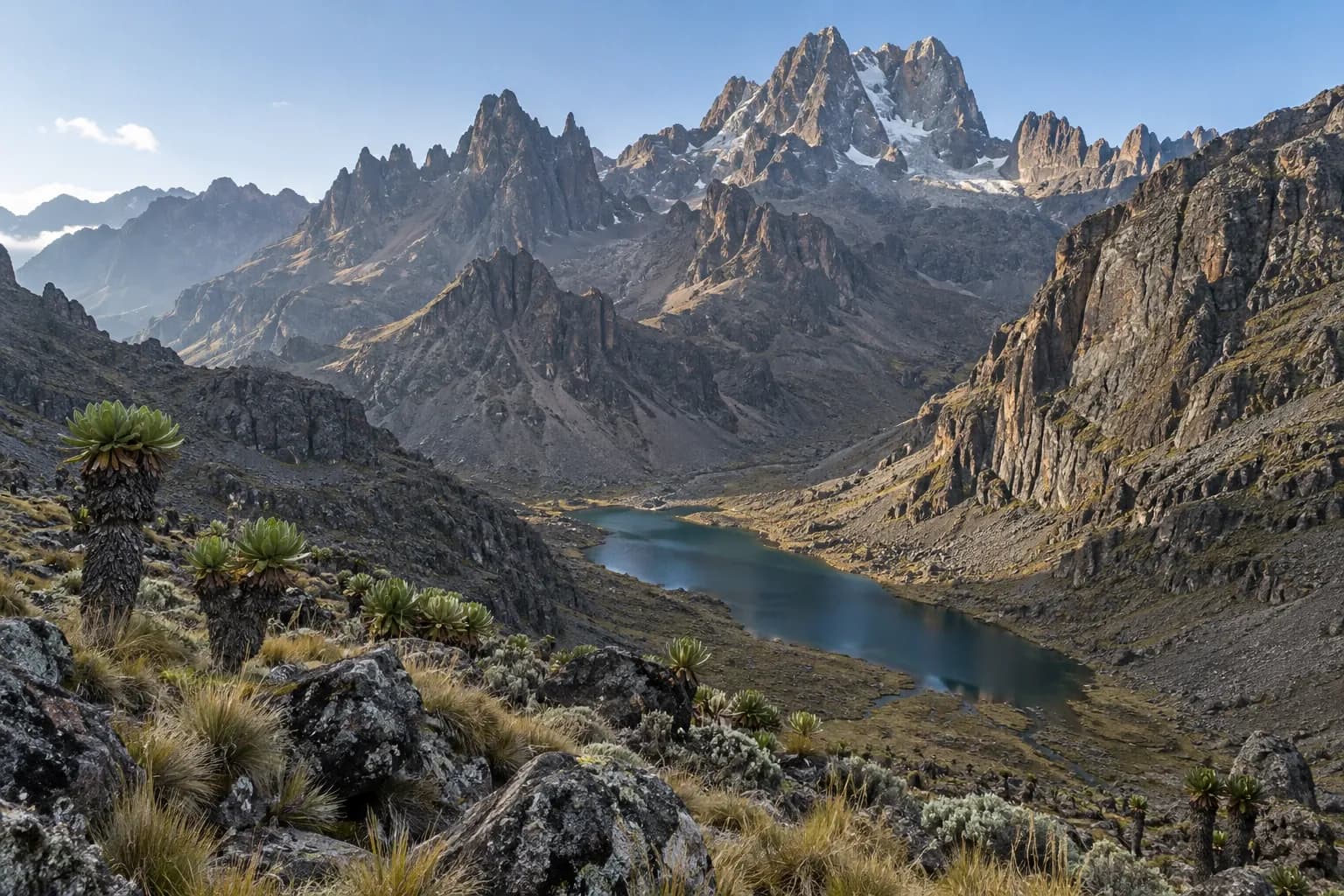
Mount Kenya rises from farmland and forest to jagged peaks. Trekking routes pass through bamboo and montane forest, open moorland with giant lobelias and groundsels, and glacial valleys beneath the main peaks.
The three main trekking routes are Naro Moru (the most direct), Sirimon (drier, on the northern side) and Chogoria (known for its lakes and gorges). Many treks go up one route and down another.
Absolute's Mount Kenya treks include a mountain guide, porters and a cook, with nights in mountain huts and camps.
Planning notes
The appeal
Summit attempts start in the early hours to reach the top around dawn.
Giant lobelias and groundsels grow on the high moorland.
Going up Sirimon and down Chogoria shows two very different sides of the mountain.
The trailheads are a few hours' drive from the capital.
Wild encounters
Rock hyraxes are common at higher camps. Lower forests are home to monkeys, buffalo and elephants, although forest wildlife is shy and rarely seen from the trail.
Summit day
Summit attempts usually begin between 2am and 3am so you reach Point Lenana around dawn. On clear mornings there are views across the main peaks, and sometimes as far as Kilimanjaro.
Reaching the summit depends on weather, conditions and how you acclimatise. Your guide's decisions on the day are always about your safety.
Travel through the year
January–February and June–October are usually the driest trekking seasons. Conditions on the mountain can change quickly at any time of year.
One of the two main trekking seasons; generally dry and clear.
Long rains; trails can be wet and visibility poor.
The other main trekking season, often cold at night.
Short rains; treks run but expect wet weather.
Your way of travelling
Optional activities are arranged separately and may cost extra.
01
The first day climbs through montane forest and bamboo, where colobus monkeys and forest birds may be heard more often than seen.
02
Above the forest, giant lobelias and groundsels grow on open moorland, one of the most distinctive landscapes in Africa.
03
Camps such as Shipton's and Mackinder's sit in glacial valleys directly below Batian and Nelion.
04
Descending by Chogoria passes Lake Michaelson and the Gorges Valley, often considered the most scenic side of the mountain.
The way there
Nanyuki (for Sirimon) and Naro Moru are about three to four hours from Nairobi; Chogoria is on the eastern side.
Our itineraries describe whether transfers are by shuttle or private vehicle.
Finding your pace
A fast ascent and descent; suits fit trekkers.
Adds an acclimatisation day, which makes summit day more comfortable.
Where to stay
Lodges and camps for this destination are agreed with you after you enquire, based on your dates, budget and preferences.
Trip ideas
Short trip
4 Days Mount Kenya – Naro Moru RouteNairobi → Naro Moru Gate → Met Station → Mackinder's Camp → Point Lenana → Met Station → Nairobi
3 safaris
 Mountain trek
4 days · Kenya · Guided climb
The direct route to Point Lenana
Mountain trek · Huts & camps
A four-day Mount Kenya trek via the Naro Moru route, through forest and the Teleki Valley to Point Lenana (4,985 m) at sunrise.
USD 600 pp
 Mountain trek
4 days · Kenya · Guided climb
Up the north side, down the east
Mountain trek · Huts & camps
The shortest traverse of Mount Kenya: up the Sirimon route to Shipton's Camp, Point Lenana at sunrise and down the Chogoria side.
From USD 560 pp
 Mountain trek
5 days · Kenya · Guided climb
A traverse with time to acclimatise
Mountain trek · Huts & camps
A five-day Mount Kenya traverse with an acclimatisation day around the peaks before a sunrise ascent of Point Lenana and the descent down the Chogoria side.
USD 750 pp
Before you go
Point Lenana is nearly 5,000 m. Ascend steadily, drink plenty of water and tell your guide early if you feel unwell.
Bring warm layers, waterproofs, broken-in boots, a head torch and a mountain-grade sleeping bag.
No climbing experience is needed, but you should be comfortable walking six to eight hours on consecutive days.
Common questions
Yes, to Point Lenana (4,985 m). The higher peaks, Batian and Nelion, are technical rock climbs.
Naro Moru is the most direct; Sirimon is drier; Chogoria is often considered the most scenic. A Sirimon–Chogoria traverse is a popular choice.
Four days is possible for fit trekkers, but five days gives more time to acclimatise.
Nights at the high camps are regularly below freezing, and summit mornings are cold and often windy. Warm layers, gloves and a hat are essential.
Yes. Our treks include a mountain guide, porters and a cook. Tips are not included.
A little more clarity
Your Mount Kenya journey
Explore safaris that include Mount Kenya, or tell us how you would like to travel.