Uhuru Peak
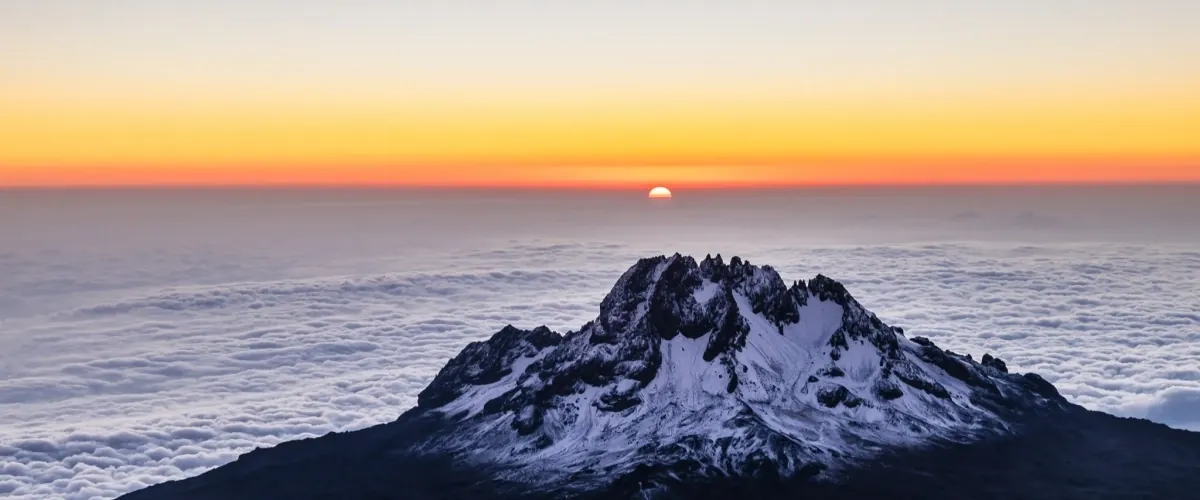
The highest point in Africa, reached on summit night.
Tanzania · North-eastern Tanzania
Walking to the Roof of Africa.
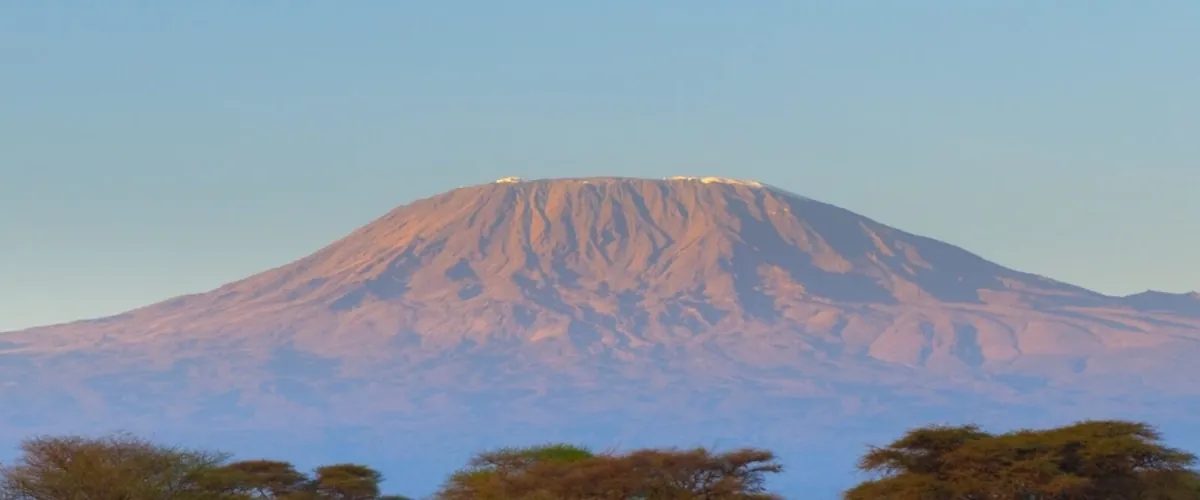
Mount Kilimanjaro is Africa's highest mountain and the world's tallest free-standing mountain, with its summit at Uhuru Peak (5,895 m). No technical climbing is needed on the main routes, but the altitude makes it a serious undertaking.
The place
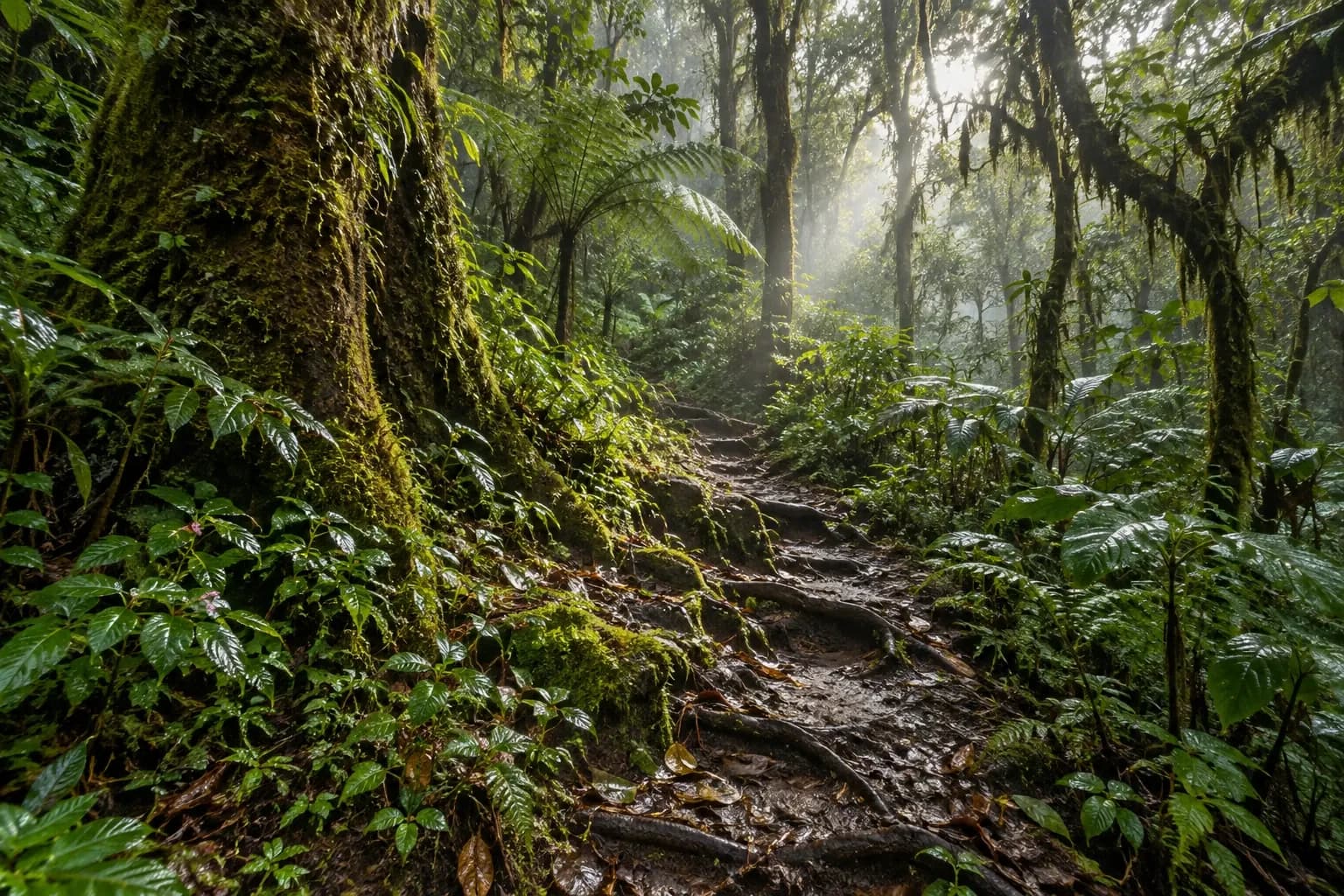
Climbing Kilimanjaro takes you through a series of climate zones, from rainforest at the gates to moorland, alpine desert and finally the icy summit area.
Absolute offers climbs on the Marangu route, which uses huts, and the Machame route, which uses tents and is known for its scenery. Longer itineraries give more time to acclimatise.
Planning notes
The appeal
The highest point in Africa, reached on summit night.
From rainforest to glaciers in a single climb.
Huts on Marangu; camping and more varied scenery on Machame.
Wild encounters
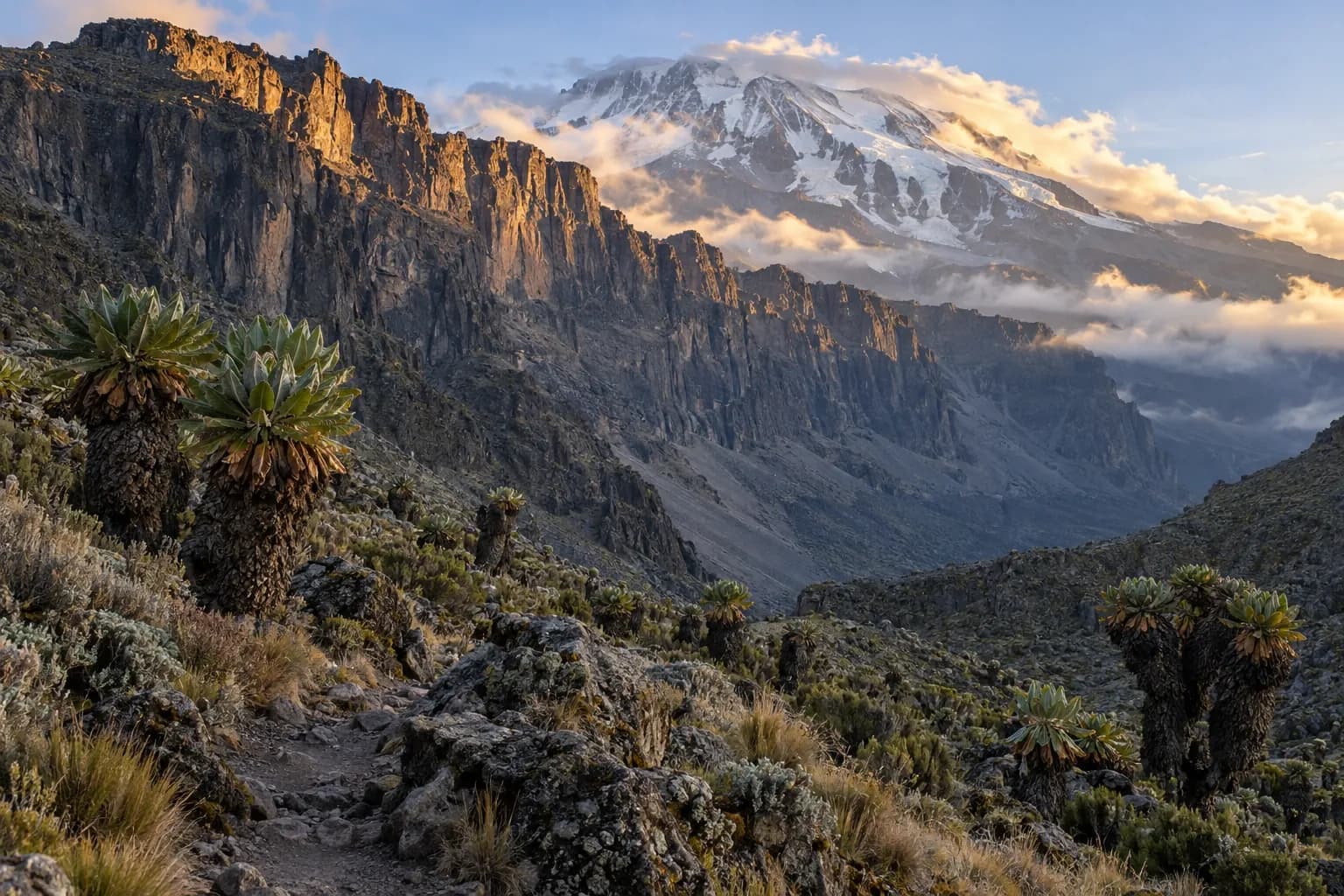
The lower forests are home to colobus monkeys and many birds. Higher up, the interest is in the plants, including giant lobelias and groundsels, and the landscapes.
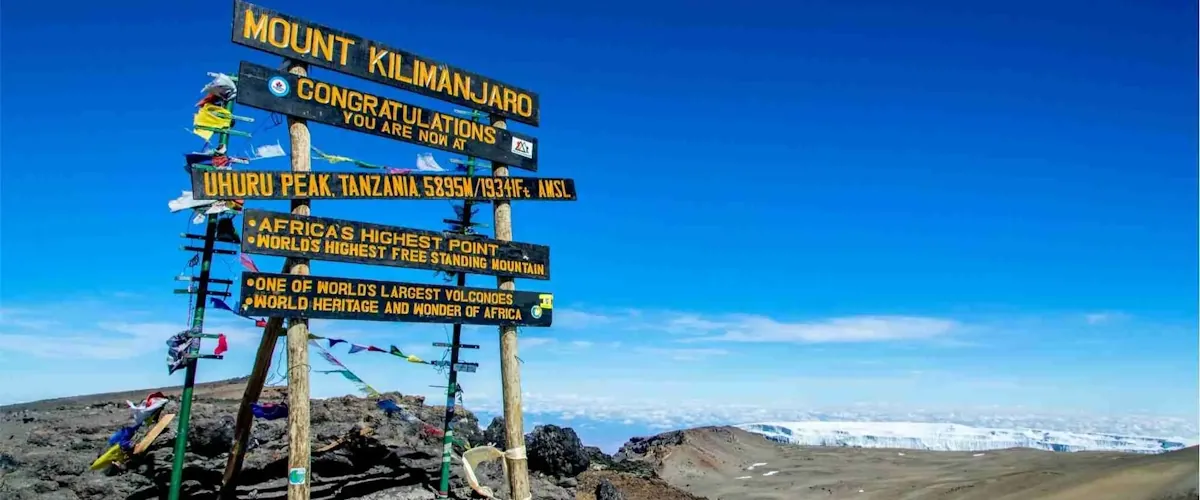
Summit night
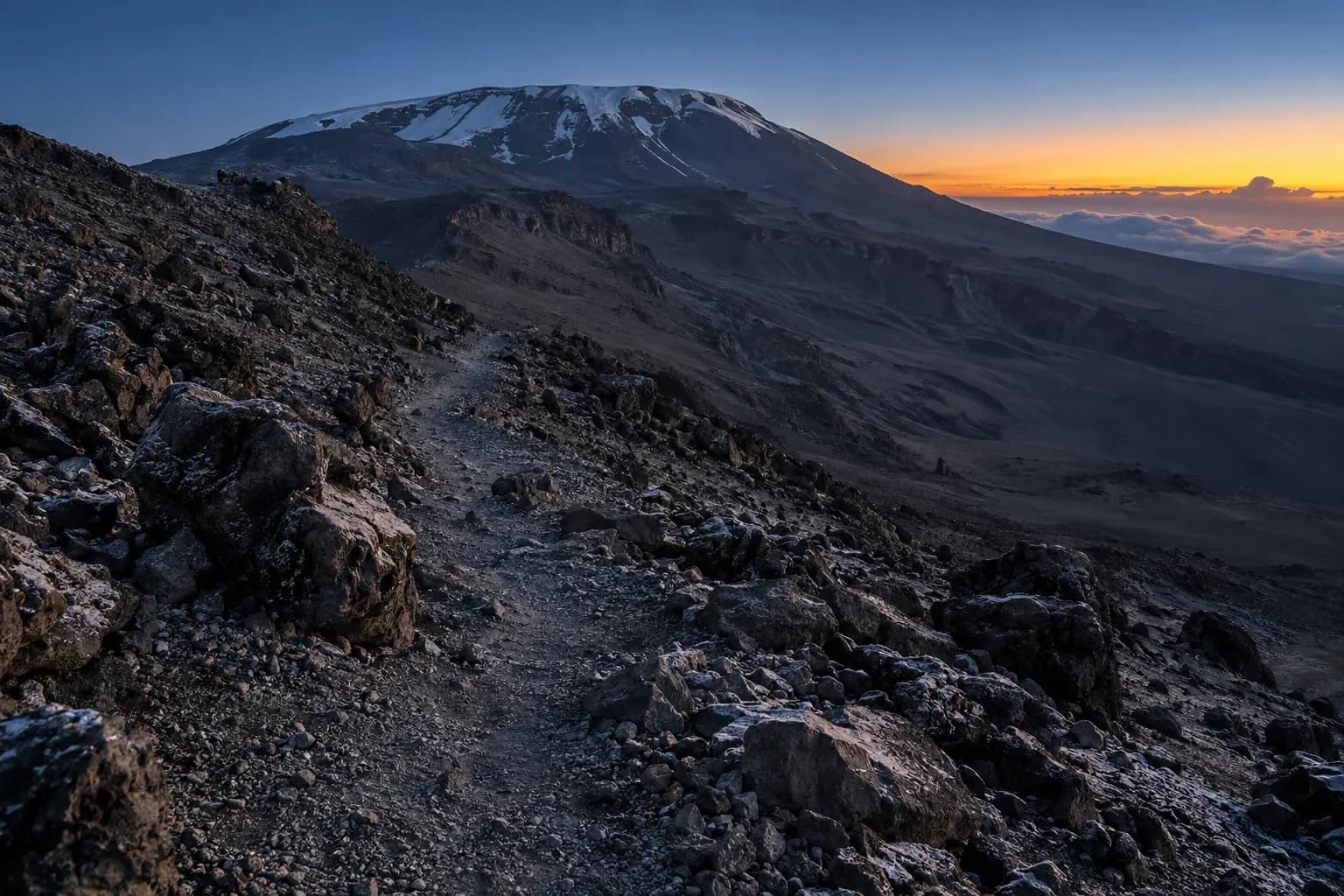
Summit attempts begin around midnight. After several hours climbing scree in the cold and dark, you reach the crater rim at Stella Point or Gilman's Point, then continue along the rim to Uhuru Peak.
Reaching the summit depends on weather, health and acclimatisation. Your guide's judgement on the mountain always comes first.
Travel through the year
January to early March and June to October are usually the driest months for climbing.
Generally dry and clear; a popular climbing season.
Long rains; trails are wet and fewer climbers go.
The main dry season and the busiest climbing period.
Short rains; climbs run with some wet days.
Your way of travelling
Optional activities are arranged separately and may cost extra.
01
The first day climbs through rainforest where colobus monkeys and forest birds live.
02
Open heath and moorland with giant groundsels and lobelias, and wide views across the plateau.
03
Longer itineraries include a 'walk high, sleep low' day, such as a climb to the Lava Tower before descending to camp.
04
Climbers who reach Stella Point, Gilman's Point or Uhuru Peak receive a certificate from the park on the way out.
The way there
Kilimanjaro International Airport (JRO) lies between Moshi and Arusha.
Arusha is reachable from Nairobi by shuttle or road via the Namanga border.
Finding your pace
The shortest Marangu itinerary.
Extra acclimatisation, which gives most climbers a better chance on summit night.
Where to stay
Lodges and camps for this destination are agreed with you after you enquire, based on your dates, budget and preferences.
Trip ideas
Shortest trip
5 Days Mt Kilimanjaro Climbing – Marangu RouteArusha → Marangu Gate → Mandara Hut → Horombo Hut → Kibo Hut → Uhuru Peak → Horombo Hut → Arusha
4 safaris
Mountain trek5 days · Tanzania · Guided climb
The hut route to Uhuru Peak
Mountain trek · Huts & camps
The fastest Kilimanjaro itinerary, on the Marangu route with nights in huts: Mandara, Horombo and Kibo, then the summit and descent.
Price on request
Mountain trek6 days · Tanzania · Guided climb
The hut route, with an acclimatisation day
Mountain trek · Huts & camps
The Marangu route with an extra acclimatisation day at Horombo Hut, giving your body more time to adjust before the summit.
Price on request
 Mountain trek
6 days · Tanzania · Guided climb
The scenic camping route
Mountain trek · Huts & camps
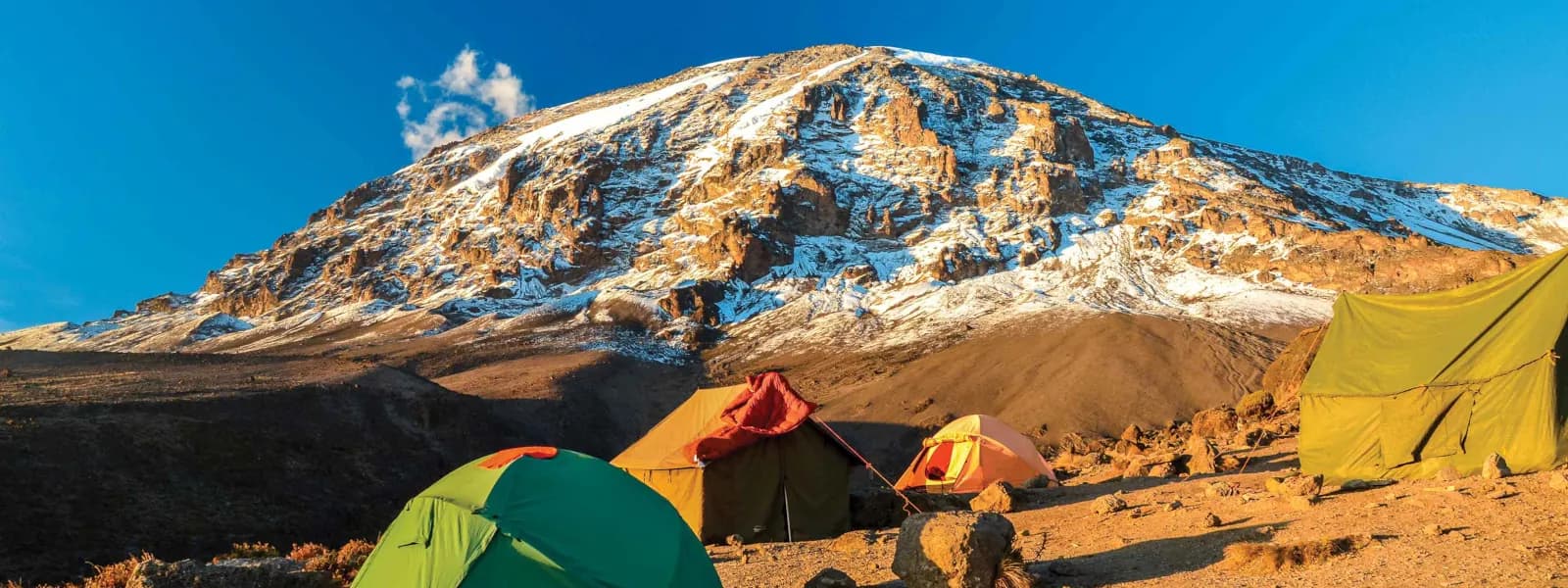
The Machame route in six days, camping across the Shira Plateau, past the Lava Tower and up the Barranco Wall to Barafu and the summit.
Price on request
Mountain trek7 days · Tanzania · Guided climb
Machame with an extra night at Karanga
Mountain trek · Huts & camps
The seven-day Machame climb, adding a night at Karanga Camp after the Barranco Wall for better acclimatisation before Barafu and the summit.
Price on request
Beyond Kilimanjaro
Before you go
Altitude sickness can affect anyone. Walk slowly, drink well, and descend if symptoms become serious.
Speak to a doctor before booking, especially if you have heart, lung or blood-pressure conditions.
A warm down jacket, waterproofs, a four-season sleeping bag and broken-in boots are essential.
Common questions
No technical experience is needed on the Marangu and Machame routes, but you should be fit and prepared for several days of walking at altitude.
Marangu uses huts and has a steady gradient. Machame is more scenic and uses tents. Longer itineraries on either route help acclimatisation.
We do not publish summit success rates. Your chances depend mostly on acclimatisation, so choosing a longer itinerary is the best thing you can do.
Well below freezing before dawn, and wind can make it feel colder still. A down jacket, warm gloves and layers are essential.
Some items, such as sleeping bags and poles, can usually be hired locally. Ask us when you book, and bring your own broken-in boots.
A little more clarity
Your Kilimanjaro journey
Explore safaris that include Kilimanjaro, or tell us how you would like to travel.